
On Photography
I’m a wanderer. I always have been
As a five-year-old, I played in the doghouse at the corner of our 1904 family cottage, listening to the spring stretch and slap of the wooden screen door just a few feet away. From there I could hear the call of the woods—drawn to the Pony Trail, a rutted path threading through fields and the remnants of a vanished farm behind our home in Colonia, New Jersey. Even then, the world revealed itself in quiet compositions: light filtering through leaves, the geometry of a fence, a line of shadow, a stillness that felt like a secret waiting to be kept. Those images gathered in my mind so insistently that I didn’t merely want to see them—I needed a way to preserve them.
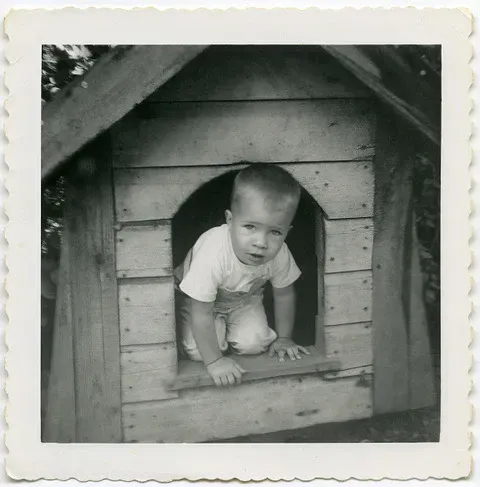
Cameras, I was told, were for adults. My mother liked to say that before I could speak, I would cry when she showed me family photographs—something about the frozen moment must have felt too final, too powerful. But when I won my first camera—an Imperial Satellite 127—in a third-grade contest at St. Cecilia’s, I finally possessed my visual notebook. I chose the number eight in a runoff.
The rest, as they say, is history.
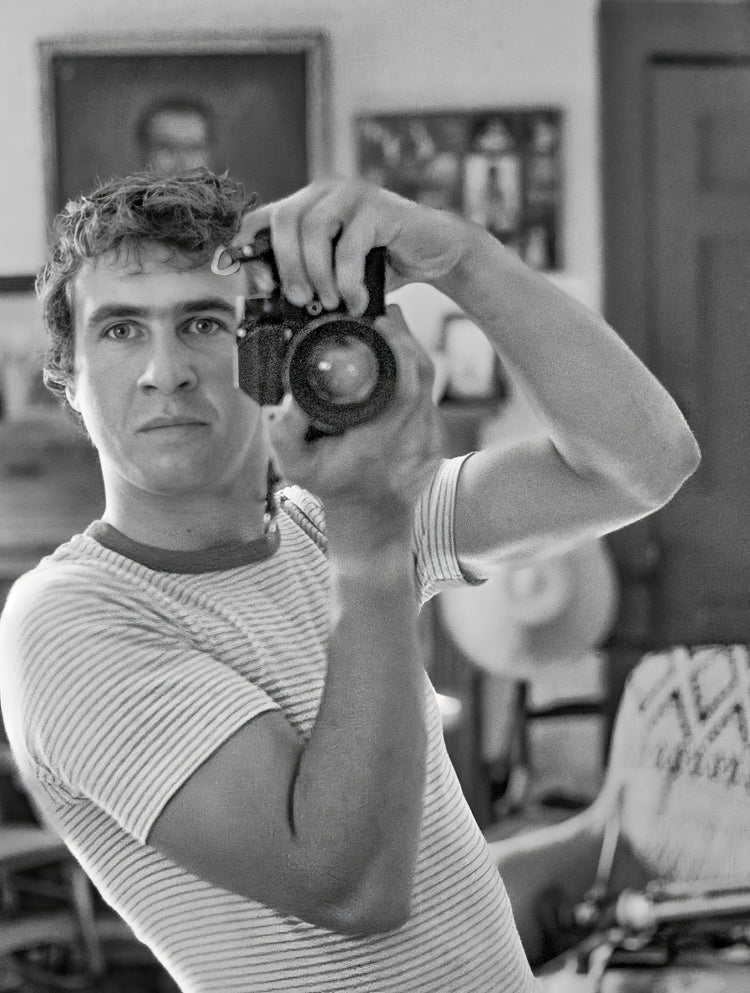
Photography became my way of stepping into the world—and stepping away from my insecure, shy self. Early on, I would photograph anything but people, hiding that shy self behind the camera. In compensation, I’d observe and wait, or jockey for position until a composition revealed itself. It is quiet introspection and escape from it at once. It is the purposeful search for an image—iconic or playful—that resonates, that carries its own gravity, and asks to be remembered.
I’ve rarely exhibited my work. I’ve never entered competitions. My overriding interest has always been in the making—the craft, the chase, the private satisfaction of building a photograph. But it feels like the right moment to bring these select images out from under the basket and into the world; to share them, and to offer the resonance of the wonder, joy, and deeper appreciation they still bring me.
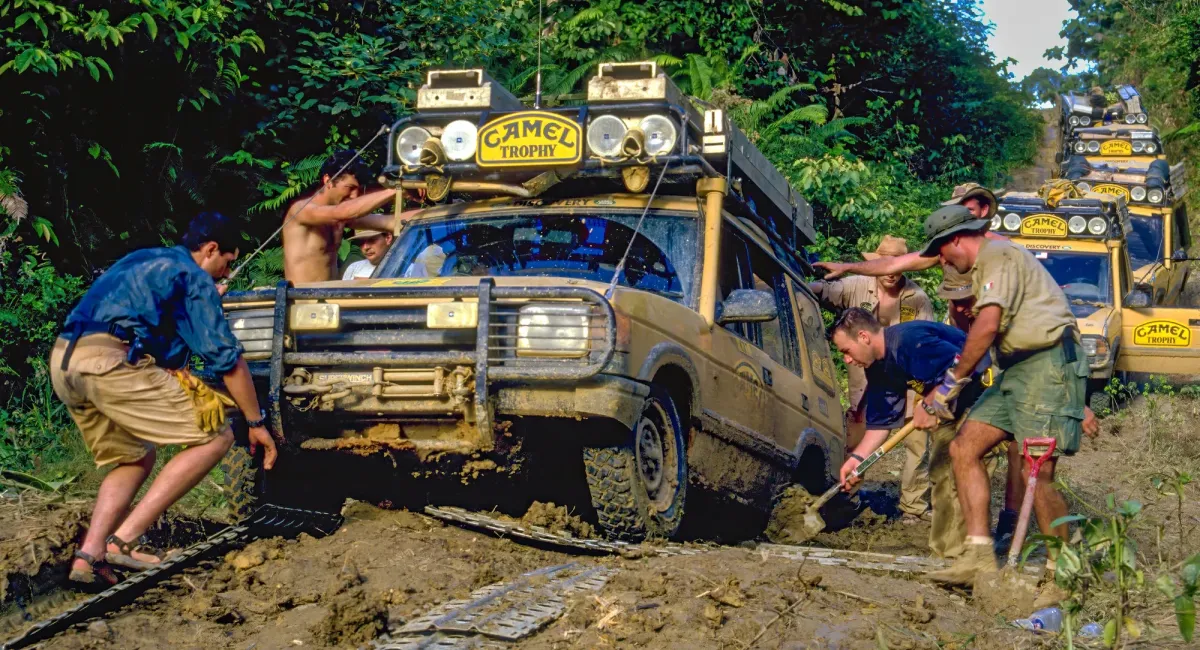
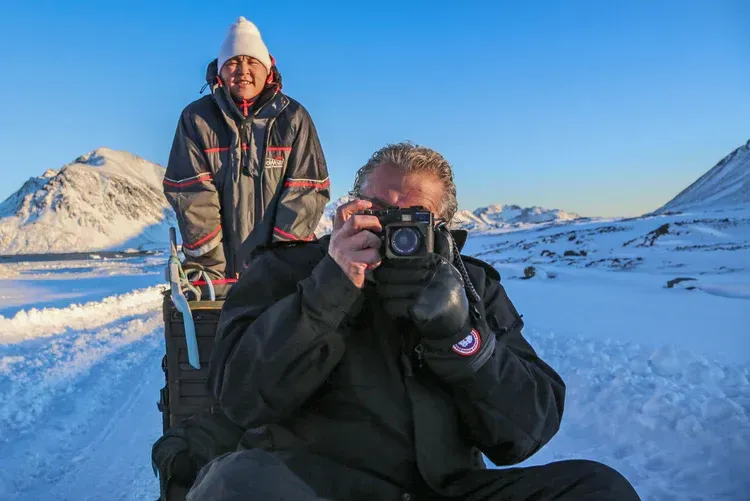
It was a long road from that doghouse to the rainforests of Borneo, the vast Greenland ice sheet, and the streets of Rome and Prague. It’s always a kind of jockeying for place—camera set and poised—my own quiet ballet of anticipation as multiple elements briefly align for the mere millisecond before scattering back into the universe, lost forever.
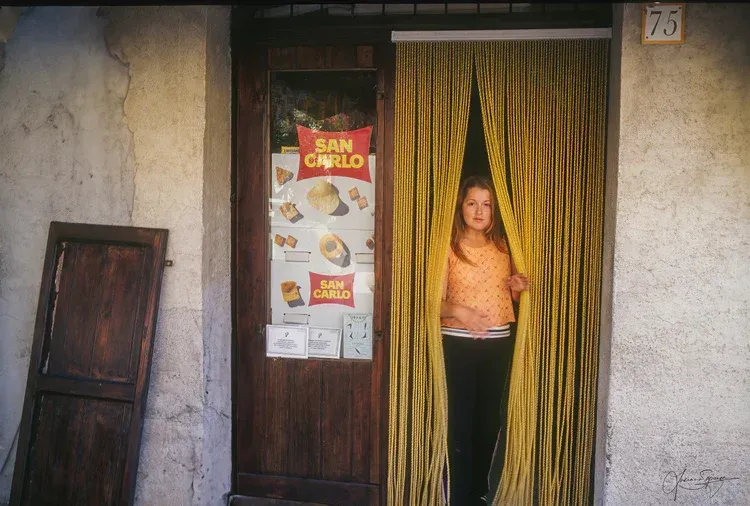
“Mona Lisa di Gratteri”
The most fleeting of those moments came one July morning in my grandfather’s hometown of Gratteri, Sicilia. My Leica M6—set and ready, aperture and shutter speed chosen, hyperfocal distance pre-adjusted—rested in my right hand like an extension of instinct.
As I approached the Chiesa Madre, a faint movement deep inside a shadowed grocery doorway brushed the edge of my peripheral vision. The beaded curtain rustled. In one fluid, thoughtless motion, I raised the rangefinder, framed as best I could, and released the shutter.
She allowed me one frame—no more.
By the time I advanced the film, she was gone—disappearing as quickly as she had appeared, perhaps startled by the bold stranger who had borrowed a fraction of a second from her day. Not until I processed the film in Rome did I fully understand what I had caught in that 1/30th of a second: a contemporary Mona Lisa di Gratteri—nearly lost to time, now held, improbably, in silver, light, and color dyes.
It remains one of my most cherished photographs.
More Than Capturing a Moment
Photography is more than the capture of a “decisive moment.” It is technical and intellectual—an immersive way of paying attention, a form of situational awareness.
With film, the process becomes part of the reward: choosing a lens, the tactile experience of focusing, adjusting aperture and shutter speed. Each decision is deliberate—shaped by intention, instinct, and sometimes simply by the mood of the day… or the panic of the about-to-fade moment.
I love the ritual of loading film—35mm, 120, 4×5. To this day, nothing is more tactilely satisfying than loading a Hasselblad V-System film back. After thousands of rolls, I can still—through muscle memory alone—load 120 film with the precision of a near-meditative, eleven-step, thirty-second hand ballet.
I rarely sit still.
On Digital — What Would Ansel Adams Do?
Digital photography is both a blessing and a curse.
The curse can turn the photographer into a servant of the computer and the camera—drawn into endless variations, endless points of processing. I remain committed to minimal manipulation, and to staying faithful to what compelled me to make the photograph in the first place.
Ansel Adams was the master of interpretation, crafting prints to match his previsualization. Moonrise, Hernandez reminds us that the “straight print” was never the goal—intention was.
Ironically, digital tools now allow me to shape both film and digital images more efficiently toward that original vision. Many of the images you see here were made on film—some of them fifty years ago. Without digital tools, some of these photographs might never have been seen at all.
Selective adjustment is a gift. But I recoil from the artificial—from over-saturated, hyper-real photographs designed to impress rather than communicate. Dials, menus, and screens will never replace the tactile satisfaction of a mechanical camera in hand. Still, when used with restraint, digital tools can remain faithful—to the moment, and to the photographer.
Influences and Inspiration
Some influences are technical—teachers who show you structure, patience, the grammar of an image. Others are harder to name. One of my deepest influences remains a person. Not as subject, and not as a romantic cliché—but as a resonance, like a tuning fork—an ethereal presence that heightens the emotional register and, in turn, the seeing. The influence isn’t imitation. It’s ignition. Once lit, it endures—and drives. For that, I remain deeply grateful.
I had the privilege of studying at the Maine Photographic Workshops and the International Center of Photography with masters including David Burnett (“Lou, you make Ektachrome look good!”), Ezra Stoller, John Loengard, Jodi Cobb, and John Sexton.
But my most profound one-on-one photographic influence remains Sam Abell, former National Geographic staff photographer. I became his teaching assistant at the Maine Photographic Workshops, and his careful composition, patience, and storytelling remain central to my own approach. Sam honored me by inviting me to assist on two National Geographic Shaker assignments—Sabbathday Lake, Maine, and Canterbury, New Hampshire—and by requesting three copies of my portfolio for The Geographic.
A Lifelong Journey
People often ask what I “shoot,” or what my favorite subject is. When I answer, “Nouns—people, places, and things,” I’m usually met with a puzzled look. But it’s true. I’m drawn to whatever the world offers: the human, the built, the wild, and the quietly overlooked.
“Do you find the photograph, or does the photograph find you?” I believe it’s both. A lifetime of wandering conditions the subconscious to recognize the split second before what Henri Cartier-Bresson called images à la sauvette—images on the run, fleeting instants that culminate in a single frame and then disappear.
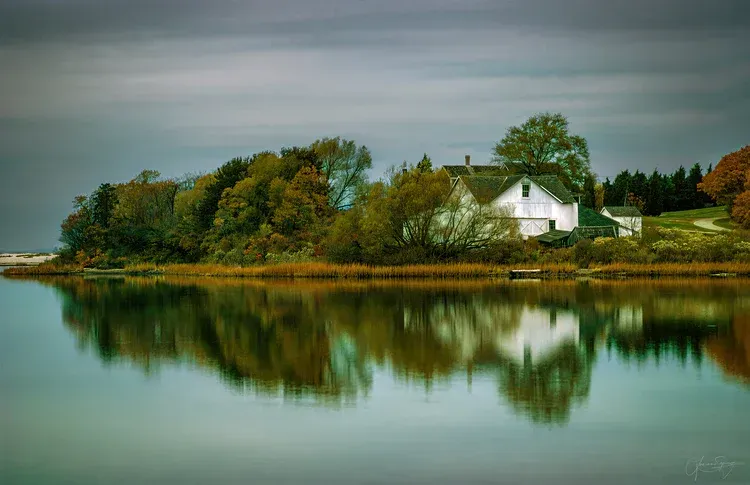
Each photograph you see here is an invitation to slow down, look longer, and bring home a piece of the world’s beauty, history, and wonder I’ve been privileged to witness.
Bring Your World Home.
Join the Journey
The photographs are just the beginning. Behind every image is a story: a frozen tundra, a DC-3 that shouldn't have made it, a veteran whose sacrifice deserved to be remembered.
Sign up for dispatches from the field: expedition updates, stories behind the work, and a look at what's next.
No noise. Just the good stuff.